










What Makes Champagne Champagne? A Simple Guide
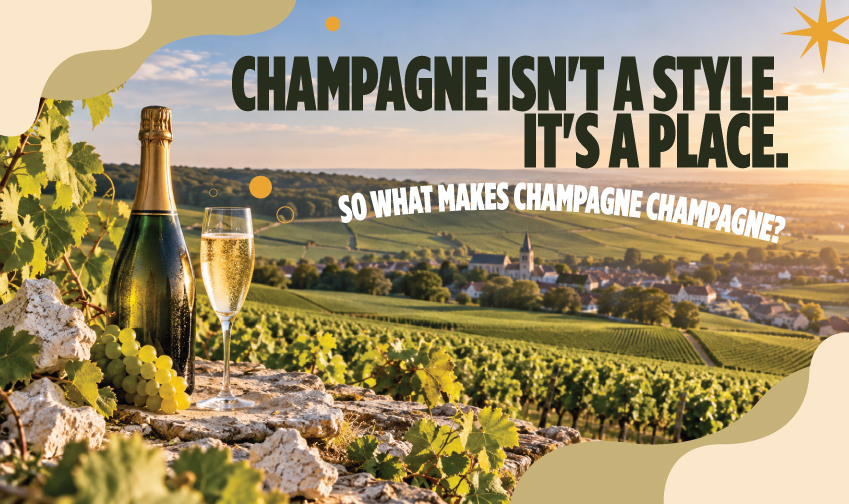
Champagne Isn’t a Style. It’s a Place.
Habibi, here’s one of the quickest ways to make a wine person twitch: call every bottle of bubbles Champagne.
I get it. It fizzes, the cork pops, it looks the part. But Champagne isn’t another word for sparkling wine. It’s a wine with an address, a rulebook and a very particular way of being made. In fact, a sparkling wine can follow a very similar production method, use the same grapes and taste absolutely delicious, and still not be Champagne.
So, with Champagne Day upon us, it feels like a good time to settle this.
What actually makes Champagne... Champagne?
First Things First: It Has to Come From Champagne
This is the big one.
To be called Champagne, the wine must come from the Champagne wine region of France, around 150 km east of Paris, within the legally defined Champagne appellation.
No Champagne, France? No Champagne.
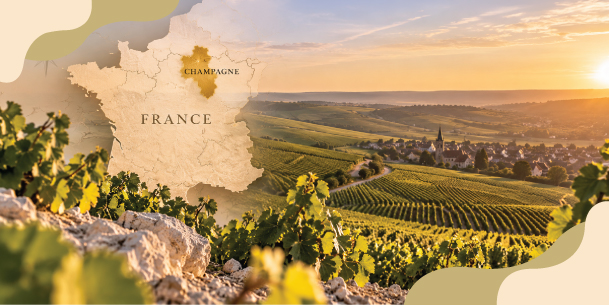
The name is protected by an Appellation d’Origine Contrôlée, or AOC, with rules covering everything from where the grapes can be grown to how the wine is made and aged. And the place itself matters.
Champagne’s northerly climate, sloping vineyards and predominantly chalky soils all influence the grapes grown there and, ultimately, the wines in your glass. You can copy a technique elsewhere, but you can’t copy the terroir.
The Grapes Matter
Three grapes do most of the heavy lifting in Champagne:
Chardonnay brings freshness, finesse and often floral, citrus and mineral notes. Pinot Noir adds body, structure and red-fruit character. Meunier tends to bring fruitiness, suppleness and roundness.
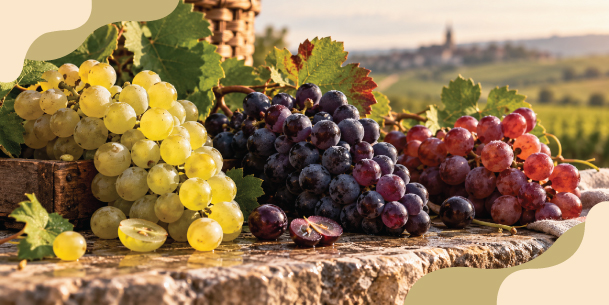
They can be blended together, used in different proportions or, in some styles, allowed to take centre stage on their own. Five much less commonly planted varieties are also permitted: Arbane, Petit Meslier, Pinot Blanc, Pinot Gris and Chardonnay Rose, though together they account for only a tiny fraction of Champagne’s vineyards.
Which brings us to some of those words you’ve probably seen on Champagne labels:
A Blanc de Blancs is made exclusively from white grapes, most commonly Chardonnay.
A Blanc de Noirs, despite being a white Champagne, is made exclusively from dark-skinned grapes such as Pinot Noir and/or Meunier.
Yes, you can make white wine from black grapes. Wine likes to keep us on our toes.
And Then There Are the Bubbles
This might come as a shocking revelation to you, habibi, but Champagne doesn’t start life sparkling. First, the grapes are pressed and fermented to create still base wines. Those wines can then be blended across grape varieties, vineyard sites and, for non-vintage Champagne, different years to create the producer’s desired style.
Then comes the important bit:
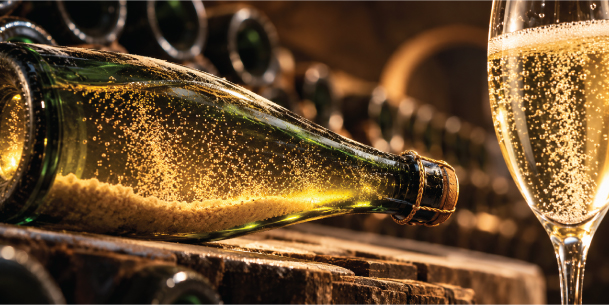
The wine is bottled with a liqueur de tirage, a mixture of still wine, sugar and yeast, triggering a second fermentation inside the bottle. As the yeast consumes the sugar, it produces carbon dioxide. With nowhere to escape, it dissolves into the wine. And there you have it: bubbles!
This stage is known as prise de mousse, literally the capturing of the sparkle, and Champagne regulations require this second fermentation to take place in the bottle.
In other words, the bubbles aren’t simply added at the end. They earn their place.
Then Champagne Has to Wait
Now comes the virtuous part: patience. After that second fermentation, Champagne spends time ageing in the bottle on its lees, the yeast cells left behind after fermentation. And those lees do more than hang around: as they gradually break down, they add complexity to the wine and can help develop distinctive mature Champagne aromas, including richer, toasty, brioche-like notes.
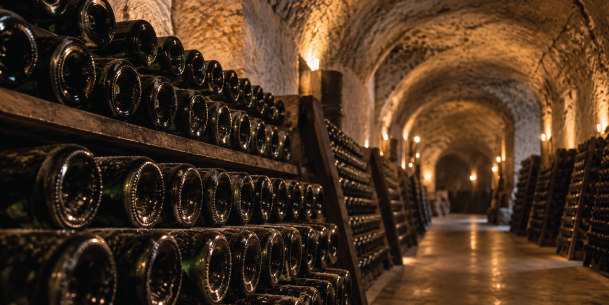
Under Champagne regulations, non-vintage Champagne must mature for at least 15 months from bottling, while vintage Champagne must spend at least three years in the cellar. Many producers go considerably longer.
So yes, that bottle will disappear considerably faster than it was made. Best not to dwell on that.
Vintage or Non-Vintage: What’s the Difference?
Most Champagne you'll come across is non-vintage, often shortened to NV.
Rather than representing a single harvest, non-vintage Champagne can bring together wines from different years. This gives producers the freedom to maintain a recognisable house style even when growing conditions change from one vintage to another.
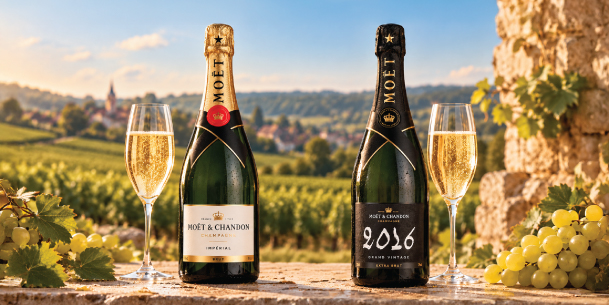
Vintage Champagne, meanwhile, comes from grapes harvested in a particular year chosen by the producer as worthy of showcasing. It carries that year on the label and must spend at least 36 months ageing in the cellar, although it is often matured for much longer.
Think consistency versus character of a particular year. Neither automatically means “better”. Just different.
So Why Aren’t Prosecco and Cava Champagne?
Because Champagne is not a quality ranking: it’s an origin.
Prosecco has its own Italian identity and production rules (to know more, read my Prosecco guide). Cava has its own Spanish heritage. And plenty of other regions around the world make excellent sparkling wines too.
Some sparkling wines even undergo their second fermentation in the bottle, just like Champagne. Still not Champagne.
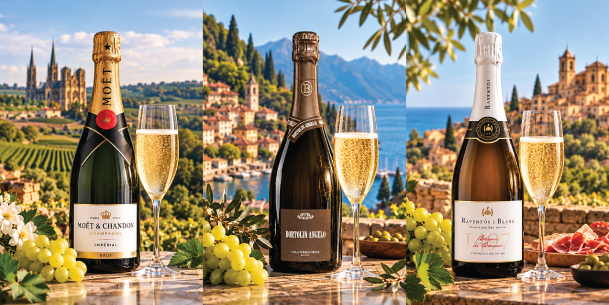
To carry the name, a wine needs the whole package: the place, the permitted grapes, the production rules, the second fermentation in bottle, the ageing and the savoir-faire of the Champagne appellation. So when someone says:
“But it’s basically Champagne…”
You now have several paragraphs with which to respond. Use this power responsibly.
Brut, Extra Brut, Demi-Sec... What Does It All Mean?
While we’re clearing things up, those terms on the bottle mostly tell you about sweetness.
Towards the end of the Champagne-making process, after the sediment left from ageing has been removed, a small amount of liqueur d’expédition (a mixture of wine and sugar) may be added. This stage is called dosage, and the final sugar level helps determine the style named on the label.
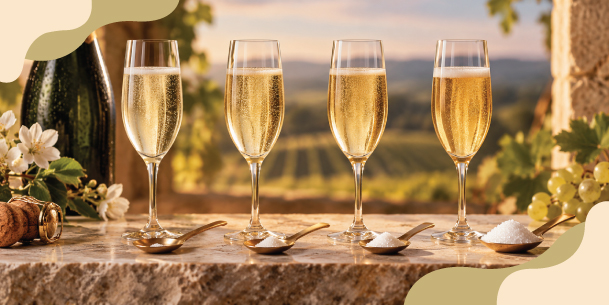
Brut is one of the terms you’ll see most often and contains less than 12g of sugar per litre.
At the very dry end, Brut Nature, also known as Pas Dosé or Dosage Zéro, contains less than 3g per litre with no dosage sugar added.
At the sweeter end, you'll find styles such as Demi-Sec, containing between 32 and 50g per litre.
So no, “Brut” doesn’t mean better either. It just tells you something about what’s inside.
What Makes Champagne So Special, Then?
It would be easy to say the bubbles, but plenty of wines have those.
What makes Champagne Champagne is everything behind them.
A specific patch of France. Grapes shaped by its climate and soils. Strict rules developed over generations. A second fermentation inside the bottle. Months, often years, spent quietly ageing before anyone gets anywhere near the cork.
It isn't simply a style of sparkling wine: it's a place, a method, a protected name and a rather impressive amount of patience.
Which means the next time somebody asks whether Prosecco is Champagne, you know the answer.
No.
But you should probably open both and conduct further research.
For educational purposes, obviously.
Discover our Champagne selection on MMI Home Delivery and raise a glass to Champagne Day!
Sip responsibly.

Celia Rime
The Storyteller. Part word witch, part curious sipper, Celia brews stories to keep your glass (and your mind) topped up.